



State Rep. Brad Slagh today introduced bipartisan legislation to improve safety standards surrounding electric transportation devices by distinguishing traditional e-bikes from higher-powered electric mopeds and motorcycles.
Michigan law currently defines three classes of electric bicycles. Class 1 and Class 2 e-bikes are limited to 20 mph, while Class 3 e-bikes may provide pedal assistance up to 28 mph. All three classes are limited to electric motors of no more than 750 watts.
Slagh’s legislation would clarify that electric mopeds are subject to the state’s existing definition and regulations for mopeds and that electric motorcycles are subject to those of motorcycles.
The distinction is important as electric devices have become increasingly more powerful and faster on Michigan roads, sidewalks and trails.
“We must keep pace with the growing use of the vastly different types of electric-powered devices throughout our Michigan neighborhoods,” said Slagh (R-Zeeland). “High-powered electric devices capable of high speeds should not be treated the same as a bicycle just because it has pedals or looks similar to an e-bike. We need clear rules so riders, parents, and law enforcement have a clear understanding of what these devices are and where they should be operated.”
Slagh said bringing electric mopeds and motorcycles under the state’s existing vehicle classifications would establish clearer requirements governing their operation, including restrictions that apply to motor devices and their use on sidewalks and nonmotorized trails. It also would help ensure that age and other existing requirements associated with mopeds and motorcycles apply to electric versions of those devices.
Slagh’s legislation would address a growing safety concern without restricting the proper use of e-bikes for transportation, recreation and mobility.
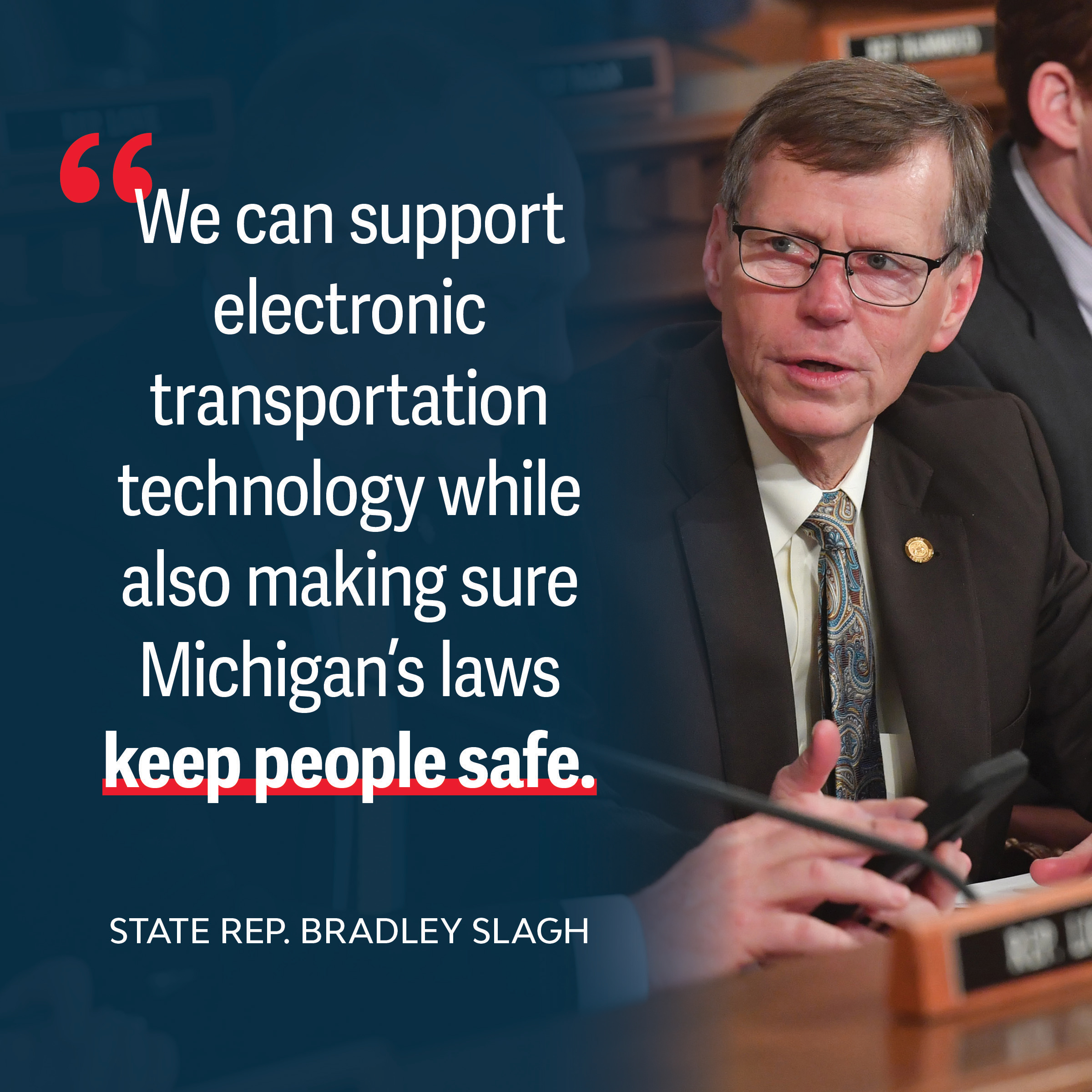
“E-bikes have become an important transportation option for many Michiganders,” Slagh said. “This plan won’t take those opportunities away, it simply ensures we have common-sense rules that match the capabilities of the devices. We can support advancing technology while also making sure Michigan’s laws keep people safe.”
The legislation is part of a broader bipartisan package to improve safety surrounding e-mobility devices. Rep. Veronica Paiz (D-Harper Woods) also has a bill in the plan that would address battery and electrical-system safety for e-bikes, which would require e-bikes and e-bike batteries sold and used by Michigan consumers to meet specified safety standards and establish penalties for selling noncompliant products. The measures address fire risks associated with unsafe batteries, aftermarket conversion kits and e-bikes that do not meet applicable safety standards.
“As e-bikes grow in popularity, we need to be especially sure they are safe to use. Like my constituents, I am concerned that e-bikes can be sold without meeting established safety standards,” Paiz said. “Requiring certified batteries and electrical systems is a practical prevention, addresses safety for riders and property, and holds sellers accountable.”
The bills are House Bills 6339 and 6340.




© 2009 - 2026 Michigan House Republicans. All Rights Reserved.
This site is protected by reCAPTCHA and the Google Privacy Policy and Terms of Service apply.